


Why We Choose to Talk About Hong Kong Culture
Why do we choose to talk about Hong Kong culture? For children growing up overseas, losing the language often means losing connection—with family, and with where they come from. In this opening piece, we reflect on what it means to pass on culture at home, ten minutes at a time.
When I first decided to launch the “Hong Kong Saturdays” blog series, many may have expected the opening post to be about dim sum, towering skyscrapers, or the dazzling lights of Victoria Harbour.
But before we explore these iconic scenes, I’d like to take this first entry to explain why we are doing this—and what we truly hope to pass on.
The Hong Kong I Will Always Love
No matter how the world changes, Hong Kong will always be the place I love most in this world. In particular, the Hong Kong I grew up in will forever hold a deep, irreplaceable place in my heart.
The damp, humid air… the winding hill paths… the beaches and countryside just moments from the city—these all formed a unique home where nature and urban life coexisted.
Life in Hong Kong moves at a brisk yet orderly pace. It is efficient, full of culinary delights, and incredibly convenient. It was in Hong Kong that I developed my professional skills, broadened my horizons, and laid the foundations for the person I would become.
But most importantly, it was the place where I met my closest friends and shared life with my beloved family.
The Hong Kong Spirit I Knew
The Hong Kong people I knew possessed a kind of strength that’s difficult to describe.
It was a spirit rooted in integrity and principle—balanced by flexibility and pragmatism.
We were hardworking, resilient, and even in the most difficult times, we knew how to laugh, how to find lightness in the dark. These qualities, I believe, are among the most precious parts of Hong Kong culture—and they are the very values I hope the next generation will inherit and carry forward.
You may ask: has that spirit begun to fade?
Perhaps. Culture does change with society. But as I grow older, I find myself treasuring those memories even more. I long to preserve and pass on the essence of that spirit to my own child.
Leaving Hong Kong Because of Love
We didn’t leave Hong Kong because we stopped loving it.
On the contrary—it was out of an even deeper love for our children that we made the difficult decision to leave this familiar place. We hoped to give them a better environment in which to grow, both physically and emotionally.
And yet, after settling abroad, I began to see another challenge emerging: A disconnect in language and culture was quietly causing a generation of overseas children to lose their sense of identity.
Language: The First Door to Culture
I once watched a BBC documentary about children from Hong Kong growing up in the UK.
Many of them found themselves caught between two cultures—unable to fully integrate into life here, yet also feeling out of place when visiting Hong Kong, especially when they couldn’t understand the language. This sense of confusion and disconnection often evolves into a decades-long search for identity—stretching from adolescence well into adulthood.
And at the centre of it all lies language.
When a child can understand, read, and speak their heritage language, they can begin to make sense of the values and stories passed down from their family. They gain the ability to move comfortably between East and West.
Language is never just about words. It is identity. It is the key that opens the door to one’s culture. For children raised overseas, this ability determines whether they stay connected to their roots, whether they can truly communicate with their grandparents, and whether they can take part in the transmission of family memory.
It Starts at Home
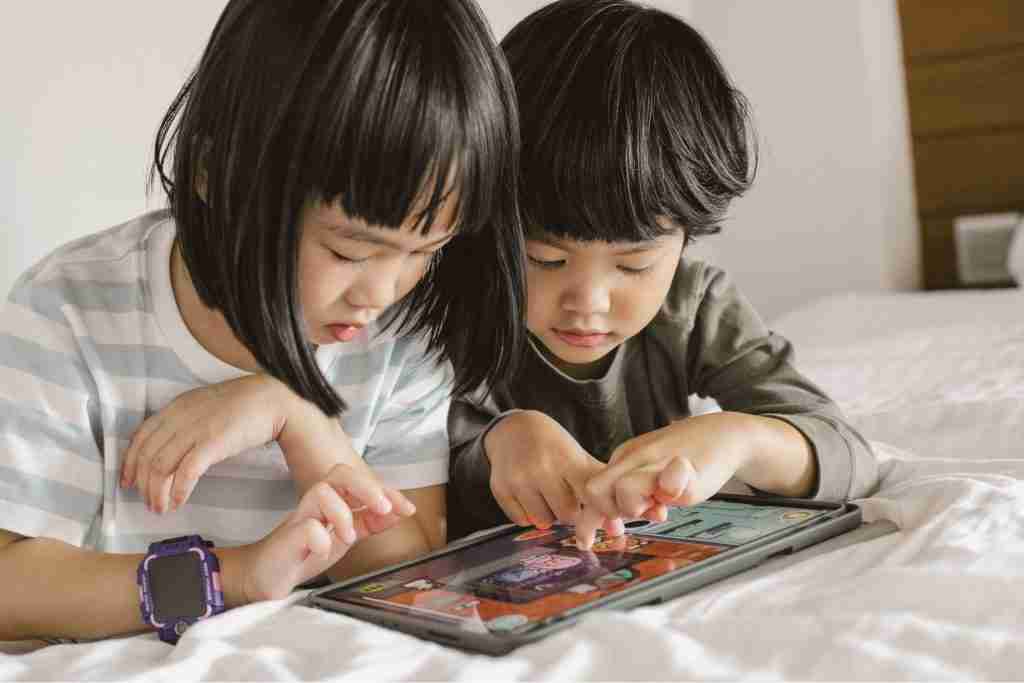
Their learning styles, emotional patterns, and unique interests helped shape the interactive scenes and stories we’ve built. We understand how busy parents are today. Balancing everyday life with educational goals is no easy task.
We often hear: “My child hasn’t even mastered English—how could they possibly learn Chinese too?”
But the truth is, the ages of 4 to 10 are the golden window for acquiring a language. It is during this time that children form a natural feel for sound, structure, and context—skills that will shape their future ability to connect with both language and culture. Once this stage is missed, it becomes far more difficult to start from scratch later in life.
We also understand the desire to outsource parenting to tutors or programmes. I’ve been there myself—searching for the perfect course, hoping that the right teacher could fix everything.
But in reality, language acquisition relies not just on lessons, but on repeated, meaningful exposure in daily life.
According to neuroscience, to truly internalise a new skill, we need to revisit it at just the point we are about to forget it—typically within 2 to 3 days. Learning must involve active output, not just passive input. And these opportunities for output are most naturally found in family interactions and conversations.
Ten Minutes a Day Can Be a Legacy
This is one of the core reasons we created this platform.
We want to offer simple yet effective materials that help parents use even ten minutes a day to walk with their children on the path of language and cultural connection.
One small step in your home can be a giant leap for cultural continuity. We don’t need to wait for saviours or save us. We can start with ourselves. Right here. Right now.
What Comes Next
In the upcoming Hong Kong Saturdays series, we’ll explore Hong Kong culture through everyday life, festivals, values, and emotions. We’ll guide children to rediscover the beauty, humour, and meaning behind the city we call home.
And we sincerely hope that this will not only be a journey of learning—but a journey of reconnection: With ourselves, our families, and the cultural roots that shaped us.
Try It Free – Begin Your Story Today
If you believe Chinese learning can be joyful, story-led, and rooted in meaning,
we invite you to begin this journey with us.
???? Enjoy 7 days of free access and help shape a new, child-centred approach to learning.